
Democrats Are Losing the Redistricting Battle, and It’s Really Bad
By: Sam Massey
On April 22, House Democrats were riding high. They had just won a costly redistricting referendum in Virginia, Trump was tanking in the polls, and it looked like Democrats had fought Republicans to a draw in the map wars while remaining on track for a House majority. Two weeks later, that picture has collapsed.
Legal setbacks on multiple fronts have reshaped the battle for the House in ways that would have seemed unlikely just a fortnight ago. As many as 10 seats could now swing toward Republicans in a worst-case scenario for Democrats, and the pace at which the ground has shifted is, by any measure, stunning.
The Supreme Court’s April 29th ruling in Louisiana v. Callais, which gutted Section 2 of the Voting Rights Act, set off the most consequential chain reaction possible. Republican-controlled Southern states moved almost immediately in response. Tennessee passed a new congressional map Thursday designed to draw Rep. Steve Cohen out of his Memphis seat, carving up the state’s only Democratic-held district. The map stretches the geographically compact, majority-Black 9th District several hundred miles eastward before curling north toward the Nashville suburbs, diluting Memphis’s Black voting power in the process.
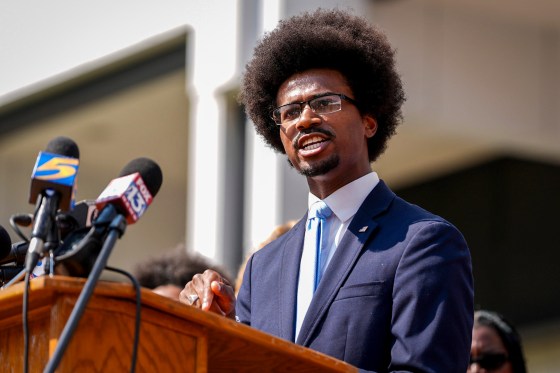
The reaction inside the statehouse was raw. Democratic lawmakers locked arms at the front of the chamber as protesters in the gallery yelled and blew air horns. Memphis state Rep. Justin Pearson, a Black Democrat running for Cohen’s seat, had a profanity-laced confrontation with state troopers in the capitol building following the vote, prompting Rep. Tim Burchett (who represents TN-2 in the US House) to call for Pearson’s arrest. Tennessee is now the first state to pass new congressional districts in the wake of Callais, and it will not be the last.
Louisiana is likely to redraw at least one of its two Democrats out of the House. Alabama Republicans are pressuring the Supreme Court to lift an order keeping the state’s current map in place until 2030, which would open the door to eliminating Rep. Shomari Figures’ seat and potentially Rep. Terri Sewell’s as well. South Carolina is weighing a new map targeting Rep. Jim Clyburn’s seat. Mississippi Gov. Tate Reeves has floated eliminating Rep. Bennie Thompson’s district, though with the primary already passed, that is more likely a 2028 move.
Then came Virginia, where the redistricting fight got complicated well before the court ruled. State Sen. L. Louise Lucas, the senior Democratic legislator who had been a leader for redistricting and among the most aggressive for the new map, had insisted publicly and privately on a 10-to-1 partisan split.
On May 6th, she had her business office raided by FBI agents. The search was tied to a Biden-era investigation into possible corruption and bribery related to marijuana dispensary businesses she owns. Lucas did not back down, framing the raid as political intimidation. “What we saw fits a clear pattern from this administration,” she said in a statement. “When challenged, they try to intimidate and silence the voices who stood up to them.” Democrats expressed suspicion about the timing; Republicans stayed publicly confident in their own efforts.
Two days later, the Virginia Supreme Court rendered all of it moot. The court struck down the voter-approved redistricting plan in a 4-3 ruling Friday, finding that the Democratic-led legislature violated procedural requirements when placing the constitutional amendment on the ballot. Voters had approved the measure by a narrow margin on April 21, but the court rendered those results meaningless. Democrats had counted on the Virginia map to net them as many as four additional House seats. Without it, two of those four targets, Reps. John McGuire and Ben Cline, are now likely safe. Reps. Rob Wittman and Jen Kiggans remain competitive, but the ceiling has dropped sharply.
Florida Republicans compounded the damage earlier, shoving through an aggressive gerrymander that could boot four Democrats from the delegation, a move that surprised even many Republicans given its scale.
The DCCC is projecting confidence publicly. “No matter how hard they try, Republicans will not be able to artificially gerrymander themselves into the majority in 2026,” spokesperson Viet Shelton said. “Voters will get the final say in November.” That may prove true. None of the Republican-drawn maps are finalized, the Florida map faces multiple lawsuits, and a worsening political environment for the GOP could still deliver Democrats seats that Republicans thought they had locked up.
Gambit Forecaster does not host a U.S. House forecast at this time.
Check out Gambit Forecaster’s most recent election forecast, California’s State Watch page, and Texas’s State Watch page.